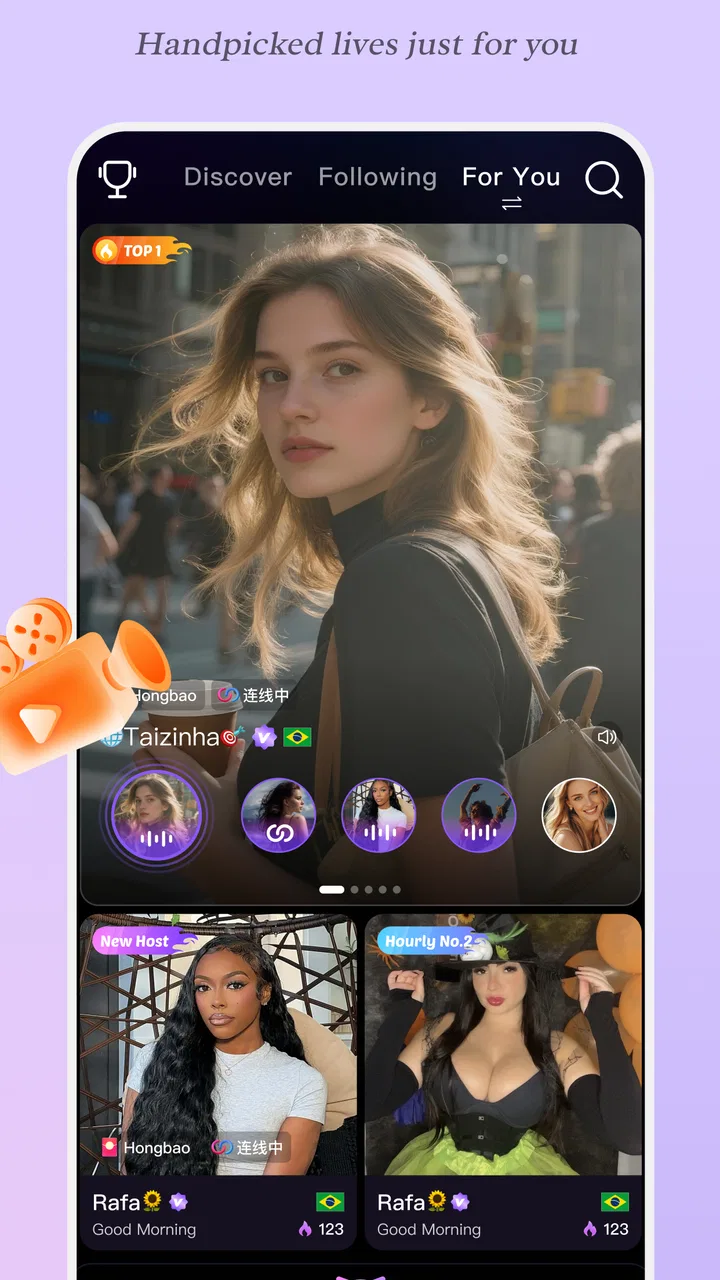
Kako Live -Live Stream & Party
- 3.9
- Rating
- 1.00M
- Installs
- Free
- Price

 Analysis by App-foxy
I approached Kakō Live -Live Stream & Party as a social app rather than simply another place to watch videos. Its appeal is the possibility of moving from passive viewing into live interaction with creators and other viewers, but that also means trust matters as much as entertainment. A live platform can feel personal very quickly, so I paid attention to the choices the app puts in front of users, the moments where spending or sharing can become relevant, and how comfortable it is to decide what kind of participation suits you.
The app comes from Rainbow Bridge Art and sits in the social category. It is free to install, carries a Teen age rating, and supports devices running Android 6.0 or later. The current version is 2.8.2. Its audience is already substantial, with more than a million installs, while the average store score is 3.9 from roughly ten thousand ratings. That combination tells me the service has found a real audience, but it also suggests a mixed experience rather than one that will satisfy everyone equally.
How Kakō Live feels when trust is part of the experience
Live streaming is different from a normal social feed because the content is happening in front of you. A recorded clip gives me time to skip, reconsider, or close the screen before I engage. A live room creates more pressure to react immediately. That can be exciting when the creator is engaging, yet it can also make a new user feel rushed into chatting, following, or spending before understanding the room.
You May Also Like

 Blood Strike: 2.5 Anniversary
Blood Strike’s Loadouts Turn Every Drop Into a Tactical Gamble
A close look at Blood Strike’s custom loadouts: how fast access to signature weapons reshapes its battle royale rhythm, rewards preparation, and narrows the gap between fights.

 Pandora - Music & Podcasts
Pandora’s Music Is Easy to Start, but Harder to Recover
Pandora’s strength is its low-effort path from a seed to a station. Its weak spot is how much confidence it asks you to place in connection, setup, and quiet recovery.

 8 Ball Pool
 Is Built on Rivalries, Rematches, and Routine
A close look at the rivalries, rematches, shared routines, and unanswered safety questions that turn a quick pool match into a persistent mobile community.

 Samsung Music
’s Quiet Strength Is Playing What You Already Own
Its reach comes less from spectacle than from dependable access to a personal library. That simplicity is both the app’s strongest retention engine and its ceiling.

 AccuWeather: Weather Radar
AccuWeather Review: A Quick, Clear Forecast for Everyday Decisions
For everyday plans, the best forecast is the one you can understand quickly. AccuWeather makes rain timing, radar, and local conditions easy to act on, with a few trade-offs.

 Hill Climb Racing
Why Hill Climb Racing Still Turns Crashes Into One More Run
A tiny car, a bumpy hill and one more upgrade: Hill Climb Racing keeps resurfacing because its simple chaos makes every near-miss feel personal.
More From Our News Desk



My first recommendation is to treat the app as a browsing experience before treating it as a social commitment. Spend time observing how rooms work, how conversations are handled, and whether the atmosphere matches what you want. You do not need to become an active participant just because the app makes interaction available. That simple separation between watching and joining is useful for anyone who is cautious about online communities.
The store summary presents the service as a way to experience live streaming and connect with creators around the world. In practical terms, that international focus can be a strength if I want variety beyond the people I already know. It can also make the experience less predictable: language, humor, streaming schedules, and community expectations may differ from room to room. I would not install it expecting a single consistent culture across the whole app.
What makes the format useful in everyday life
A realistic use case is a short evening break. I might open the app after work, browse a few live rooms, and stay with one creator whose style feels comfortable. The value is not necessarily finding a polished show; it is the feeling of being present while something unfolds and seeing other viewers respond at the same time. For someone who enjoys conversation more than carefully edited videos, that immediacy can be the main reason to return.
It may also suit users who want to discover creators outside their normal circle. A conventional social network often becomes predictable because its recommendations reflect established contacts and past behavior. A live-oriented app can feel more exploratory. I still think discovery works best when I keep my expectations modest: not every room will be interesting, and a large audience does not automatically mean the conversation will be welcoming or worthwhile.
On the other hand, I would skip Kakō Live if my priority is quiet, private communication with a small group of friends. A messaging app is usually a better fit for direct conversations, while a video platform with a strong search and replay system is more suitable when I want dependable, edited material. Kakō Live makes the most sense when the live, social element is the reason I am opening it.
Controls are more important than the first impression
With any live social service, I look for visible choices before I settle into regular use. The important questions are practical: Can I decide how much of my identity to expose? Can I leave a room without feeling obligated to explain myself? Can I avoid interacting when I only want to watch? Can I recognize when an action involves money instead of treating it like an ordinary tap?
I found that the safest approach is to make those decisions deliberately rather than relying on the excitement of a live room. Keep your public presence limited to what you are comfortable sharing, and avoid moving a conversation to another service simply because a creator or viewer asks. This is not a criticism unique to Kakō Live; it is a basic rule for live communities, where familiarity can develop faster than genuine trust.
The app’s free price makes it easy to try, but free access should not be confused with a completely cost-free experience. In-app purchases range from forty-nine cents to $199.99 per item. That is a very wide gap, and it changes how I would use the service. I would treat every virtual purchase as optional entertainment, not as a requirement for belonging, visibility, or a closer relationship with a creator.
The most useful spending habit is to decide my limit before entering a live room. Live interaction can make small purchases feel insignificant, especially when they are connected to a moment of excitement or public recognition. Setting a personal ceiling in advance creates distance between the emotional moment and the payment decision. If I am unsure what a button does, I would not tap it until I understand whether it starts a purchase, sends a gift, or changes my account activity.
Where data sensitivity enters the experience
A live social app naturally brings sensitive moments even before money is involved. A profile can reveal patterns about interests, availability, and the communities a person follows. A chat message can expose more than intended because it is written in front of other people. A live interaction may also make users forget that an online audience is still an audience, even when the room feels friendly.
For that reason, I would avoid sharing a full name, home details, workplace information, travel plans, or anything that could make offline identification easy. I would also be careful with photos, background sounds, and casual comments that reveal where I am. This is especially important for younger users because the Teen rating does not remove the need for active supervision and good judgment.
I would review the app’s permission prompts and account choices as they appear on my device, granting only access that makes sense for the action I am trying to perform. I do not assume that a social app needs every possible permission simply because it offers live features. If a permission request feels unrelated to browsing or participating, I would pause, read the explanation, and decide whether that feature is worth the added access.
The same caution applies to account details. I would use a password that is not reused elsewhere and keep recovery information current. If the app offers account, privacy, blocking, reporting, or notification controls, I would locate them early rather than waiting for a problem. A control is most useful when I know where it is before I need it.
How I would manage a first session
My first session would be intentionally limited. I would browse without making purchases, observe how creators and viewers communicate, and note whether the app makes it clear when I am entering a public interaction. I would also check the notification behavior. Live apps can become distracting if every activity feels urgent, so I prefer notifications that support intentional use rather than pulling me back repeatedly.
Next, I would test the basic social boundaries. I might follow a creator whose content I genuinely enjoy, but I would not immediately connect the app to every other social identity I use. I would see how easy it is to unfollow, mute, leave, or reduce notifications. These small tests reveal more about day-to-day control than a polished first screen does.
Only after that would I consider joining a conversation. I would start with neutral comments and avoid personal details. If the room becomes uncomfortable, I would leave instead of trying to win an argument or justify my decision. A good social app should allow that kind of quiet exit, and users should make use of it whenever necessary.
One non-obvious trade-off is that being a viewer can still create social pressure. Even without speaking, I may feel encouraged to react, follow, or support a creator financially. I would separate appreciation from obligation. Enjoying a stream does not mean I owe the creator a purchase, a private conversation, or continued attention.
Comparing it with familiar alternatives
Compared with a standard short-video feed, Kakō Live is more immediate and less predictable. Short videos are easier to consume in small pieces and usually offer stronger editing, while live rooms provide a sense of presence and direct response. I would choose Kakō Live when I want the possibility of interaction, not when I need concise information or consistently polished production.
Compared with a private messaging service, the app is much more open and discovery-focused. Messaging is better for trusted relationships, sensitive topics, and conversations where everyone knows who is present. Kakō Live is better for meeting creators and communities at a distance, but that openness requires more careful boundaries.
Compared with a large general-purpose live platform, the deciding factor may be the particular creators and rooms I find rather than a universal feature advantage. I would not move to Kakō Live simply because another service feels crowded, nor would I dismiss it because it lacks the familiar habits of a bigger platform. I would compare the actual communities I enjoy, the clarity of the controls, and how comfortable I feel managing attention and spending.
There is also a difference in how I would evaluate reliability. A recorded library lets me return to something specific. A live service depends more heavily on timing and availability. If I only have a few minutes and want guaranteed value, an on-demand alternative may serve me better. If I enjoy browsing and discovering something unexpected, the live format has a stronger advantage.
Who should use it carefully, and who should pass
I think Kakō Live is a reasonable choice for adults and older teens who understand public online interaction, enjoy creator-led live content, and are willing to manage their own boundaries. It can be entertaining for viewers who like real-time conversation and international discovery. The free entry point also makes a cautious trial straightforward, provided I remember that optional purchases can become expensive.
I would be more hesitant to recommend it to someone who is easily pressured by public attention, finds it difficult to stop spending during exciting moments, or expects every interaction to be private. I would also steer a person toward a quieter alternative if they mainly want to message friends, watch edited videos, or avoid unpredictable conversations altogether.
Parents and guardians should not treat the Teen label as a substitute for a conversation about privacy, money, and contact with strangers. I would explain why personal details should stay private, how to leave an uncomfortable room, and why virtual gifts or other purchases need permission. The best protection is not merely installing the app; it is making the choices understandable before a young user encounters pressure.
My cautious verdict after weighing the trade-offs
Kakō Live has a clear identity: it is built around the energy of live social discovery rather than a quiet archive of finished media. I like that it can turn a short break into an interactive experience and expose me to creators I would not encounter through my usual circle. Rainbow Bridge Art has positioned it for people who want connection around live content, and the app’s large install base shows that this format appeals to many users.
Still, I would not recommend using it on autopilot. The combination of public interaction, personal disclosure, notifications, and purchases requires active choices. The broad in-app purchase range makes spending discipline particularly important, while the live format makes emotional decisions feel immediate. My best experience would come from browsing first, limiting what I share, checking account controls, and treating every payment as optional.
The 3.9 average feels consistent with an app that can be enjoyable when the right creator and community are present but may not feel equally smooth or valuable to everyone. I would try it if live conversation is genuinely what I want. I would skip it in favor of private messaging or on-demand video if control, predictability, and low social pressure matter more to me.
In the end, Kakō Live -Live Stream & Party is worth a measured trial, not an automatic recommendation. I would install it for discovery, use it with clear boundaries, and make trust the deciding factor in every interaction. If the rooms feel respectful and the controls let me participate on my own terms, it can be a pleasant social outlet. If I feel pushed to reveal more, spend more, or stay longer than I intended, leaving is the right choice.
FAQs for Kako Live -Live Stream & Party
01What is Kako Live - Live Stream & Party?
Kako Live is a social entertainment app centered on live video streaming and virtual parties. After installing it, users can browse live rooms, watch broadcasters, join conversations, send messages, and participate in interactive events. Depending on the available features in your region, you may also be able to host your own stream, follow creators, make friends, and use virtual gifts during live sessions.
02Is Kako Live free to download and use?
Kako Live can generally be downloaded and used without an upfront payment, allowing you to explore streams, create an account, and interact with other members. However, some features may involve optional in-app purchases, such as virtual coins, gifts, premium items, or other paid benefits. Before buying anything, check the current prices, payment method, and refund rules shown in the Google Play Store or Apple App Store.
03Do I need an account to use Kako Live?
An account may be required for many of Kako Live’s social functions, particularly sending messages, following hosts, joining parties, giving gifts, or starting a broadcast. Registration can typically involve a phone number, email address, or supported social login. Because the app connects you with other users, review the privacy settings carefully and avoid sharing personal information publicly in profiles, chats, or live rooms.
04Is Kako Live safe for children and teenagers?
Kako Live is designed around live interaction with other people, so the content and conversations may vary considerably from one room to another. Live broadcasts can include mature language, suggestive material, or contact from strangers. Parents should check the app’s age rating, read its current terms, use device-level parental controls, and discuss online safety with younger users. Never share passwords, addresses, payment details, or private photos.
05What permissions and phone features does Kako Live require?
Because Kako Live focuses on live video and social communication, it may request access to your camera, microphone, notifications, photos, and internet connection. Camera and microphone permissions are needed for broadcasting or participating in voice and video interactions, while notifications help you receive updates from followed hosts. You can deny permissions you do not need, although some features may stop working or become limited.
Pros
- Easy-to-use interface for browsing live rooms and joining parties.
- Interactive features make streams feel more social and engaging.
- Supports meeting creators and users from different countries.
- Live notifications help you keep track of favorite broadcasters.
- Offers entertaining content beyond traditional recorded videos.
Cons
- Some features may require virtual gifts or in-app purchases.
- Stream quality can vary depending on the broadcaster’s connection.
- Public chat rooms may expose users to inappropriate comments.
- Frequent notifications can become distracting without customization.
- Privacy settings should be checked carefully before interacting with strangers.

Kako Live -Live Stream & Party
Gallery